
Let’s get you back to feeling your best
Our Services
Prolotherapy/Regenerative Injection Therapy
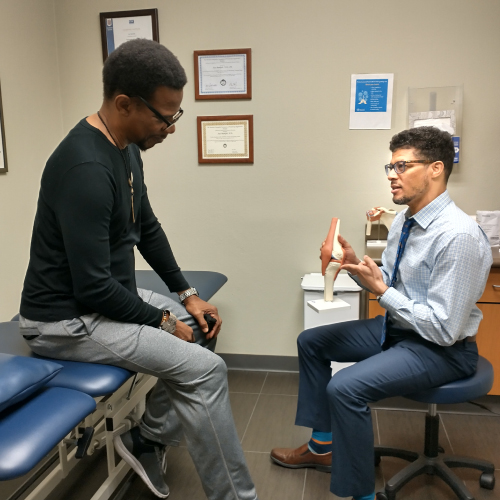
Regenerative Injection Therapy (RIT), also known as Prolotherapy, is an innovative field of Regenerative Medicine consisting of therapies that naturally stimulate the body to self-heal. Prolotherapy or RIT is performed to stimulate repair of weakened, injured or painful joints. During Prolotherapy, a series of injections is administered into problem areas to initiate the reparative healing response known as the healing cascade.
Regenerative Injection Therapies

Dextrose Prolotherapy
Platelet-rich Plasma (PRP) Prolotherapy

MSC Exosome Prolotherapy
Boost Joint Healing and Regeneration
Research in bio-cellular medicine has seen advances in slowing down cellular aging with mesenchymal stem cell Exosomes. Derived from MSC, Exosomes are communication molecules that modulate inflammation, regeneration and healing. MSC owe their reparative properties to the Exosomes they secrete. Unlike our own “stem” cells which lose their regenerative qualities through ongoing replications, telomere shortening, mutations and depletion, as a function of aging and genetics, MSC Exosomes are youthful and possess their full range of healing and regenerative capacities. When delivered to arthritic joints they dampen the impact of aging on cartilage and joints and promote repair. The healing proteins delivered by Exosomes include type I and type II collagen, hyaluronic acid, and various stem cell growth factors that yield tissue collagen, cell growth, blood vessel generation and wound healing.
MSC Exosomes are resuspended and administered with one’s own Platelet-rich Plasma for the enhancement of joint repair and healing of painful joints and arthritis.
Read More
- Treatment of osteoarthritis and joint pain
- Stimulation of connective tissue healing and regeneration
- Antibacterial and antiviral
- Modulation of inflammation
- Pain relief
Our certified sterile MSC Exosomes are processed by Kimera® Labs after isolation from young, healthy MSC. Kimera® Labs leads the field in screening, purity, and quantification of Exosomes for consistent and quantifiable levels of messenger RNA. mRNA then deliver signals to synthesize molecules for robust regenerative capabilities.
*MSC Exosomes are not FDA approved. Kimera® Labs is an FDA inspected laboratory and has received FDA clearance for its human study of MSC Exosomes.
Ongoing research in MSC Exosomes will further clarify the therapeutic effects and potential of Exosomes in disease and aging. However, anecdotal evidence continues to weigh in favor of Exosome’s benefits.
Book a Discovery Call to explore how Exosomes can help restore your health.
Ozone Prolotherapy (Prolozone)
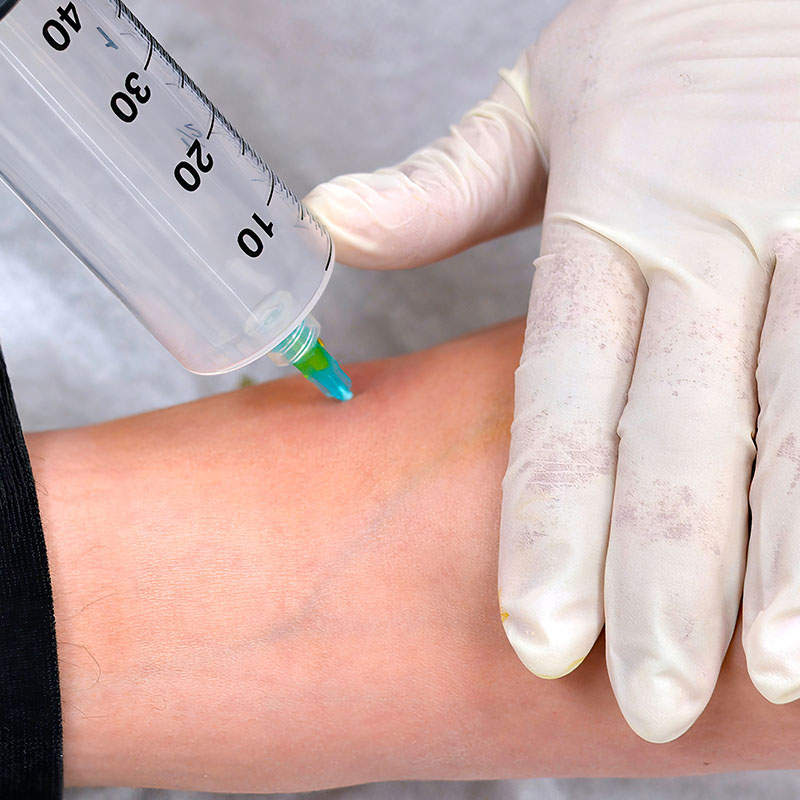
Ozone Therapy has perhaps the broadest clinical use of any healing modality known. Ozone Prolotherapy combines the healing properties of ozone with the technique and benefits of Prolotherapy. The healing properties unique to ozone’s three oxygen atom structure, are its ability to improve the body’s utilization of oxygen, thereby upregulating energy production, healing, and repair. Additionally, both Prolotherapy and ozone promote the activation of growth factors. Ozone Prolotherapy is especially beneficial for musculoskeletal pain, osteoarthritis (cartilage degeneration) and a variety of low back pain syndromes. This is because ozone optimizes healing, in part by removing inflammatory and degradation compounds from the joints. In this way, ozone even possesses analgesic properties, helping treated areas become pain-free more quickly.
Ozone Prolotherapy is researched to be therapeutic for spinal stenosis, low back pain, disc herniations, radiculopathies, knee pain, arthritis, ligament and tendon injuries, nerve pain and other conditions. Ozone can safely be injected into joints, ligaments, tendons and muscles. Ozone Prolotherapy is compatible with both dextrose Prolotherapy and Platelet-rich Plasma (PRP) Prolotherapy.
Perineural Injection Therapy
The answer to inflamed and injured nerves
Pain out of proportion to tissue damage often results from damaged nerves. Characteristically the pain takes on a form different than the original injury where the initial features may have subsided, only to be replaced with hypersensitivity, burning and pain to slight pressure. This is known as neurogenic pain and neurogenic inflammation and can happen even with connective tissue healing. With ongoing tissue dysfunction the nerves can become damaged, inflamed and send pain signals to the brain even when the nerve is not stimulated. Neurogenic pain can worsen over time, without further tissue damage.
Read More
Neurogenic pain is caused by damage to specific nerves in the skin called C-fibers. C-fibers are slow-firing, unmyelinated nerves. Lacking a myelin sheath, they have a low conduction velocity and send a slow signal compared to other nerves. C-fibers can transmit impulses from the body back to the brain, as well as from the brain, out to the body. This type of pain has a unique chemical make-up, the release of calcitonin gene-related peptide (CGRP) and substance pain by TRPV1 receptors. These compounds are also known to interfere with connective tissue healing.
Dr. John Lyftogt discovered and developed the use of 5% dextrose to treat and heal neuropathic pain using small, superficial injections targeting these dysfunctional nerves. It is thought that Perineural Injection Therapy or PIT blocks the production and release of CGRP and substance pain. A series of treatments restore the nerve cell to its normal function, decreasing and eventually eliminating pain.
Who Perineural Injection Therapy Benefits?
Most anyone with a lasting pain and sensitivity from injury, toxicity, infection or trauma can benefit from Perineural Therapy.
Perineural Injection Therapy is beneficial for those with:
- Post-injury/post-surgical joint pain
- Nerve/Neuropathic pain
- Neurogenic inflammation
- Painful scars
- Herpetic neuralgia
Perineural Therapy Visit
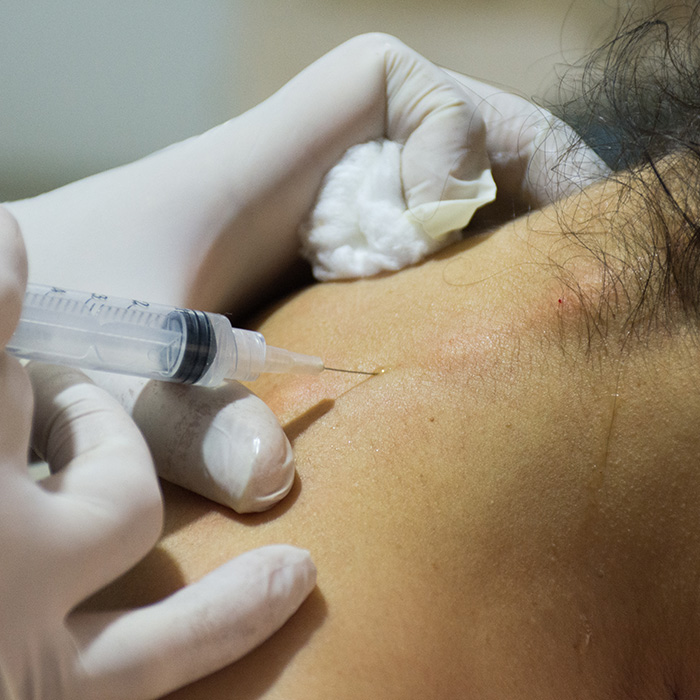
During treatment, a weak dextrose 5% solution is injected into dysfunction nerves in the skin using a short, fine needle. A temporary burn may be felt with minimal aching and stiffness shortly after. You can expect temporary relief after the first treatment. With subsequent treatments pain becomes less intense, less widespread and less easy to provoke. Perineural Therapy successfully resolves the neuropathic pain of 80% of individuals who have it. Most neurogenic pain conditions require 4-6 treatments, typically spaced one to four weeks apart depending on the condition.
If you are stuck in a cycle of pain and hypersensitivity, Perineural Therapy can be the treatment you need to resolve pain and restore healing.
Book a complimentary call to learn how Perineural Therapy can help free you from pain.

Trigger Point Injections
Regenerative Injection Therapy
Prolotherapy/RIT Ingredient Chart
Anesthetic
Procaine typically. Carrier and diluent of other agents. Promotes blood flow. Anti-inflammatory and nerve healing properties.
Benefits
Nerve pain or balance the autonomic nervous system.
Dextrose 5%
Weak sugar concentration to heal damaged and inflamed nerves.
Benefits
Used in Perineural Therapy for nerve/neuropathic pain.
Dextrose 50%
Stronger sugar concentration. Mild irritant to stimulate connective tissue healing in and around the joint.
Benefits
Ideal to promote healing for common joint concerns.
Ozone (O3)
Medical gas that promotes tissue and nerve regeneration. Stem cell release. Potent anti-inflammatory effect. Decreases pain.
Often combined with PRP.
Benefits
Any combination of connective tissue degeneration and nerve pain.
Platelet-rich Plasma (PRP)
Concentrated platelets provide an array of tissue healing growth factors. Stem cell release. Strong healing response.
Often combined with Ozone.
Benefits
To repair advanced joint damage and degeneration.
Exosomes
Secreted by stem cells. Modulates the bodies overriding healing, repair and immune mechanisms. Provides stem cell growth factors. Strong healing response.
Benefits
Combined with PRP to repair advanced joint damage and degeneration.